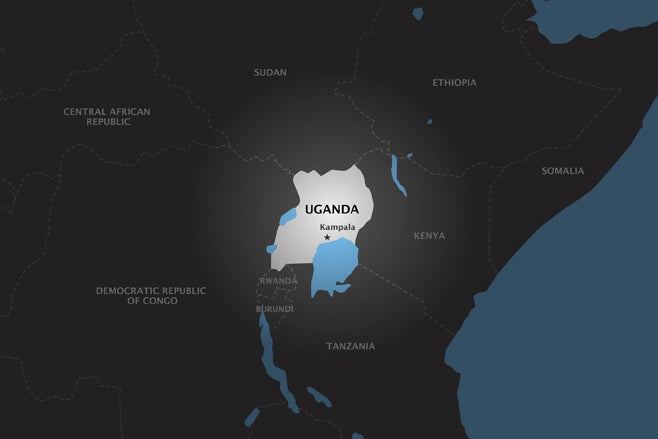
Our team are on the move again, traveling the globe in search of the truth and the untold, unreported stories about the war in northern Uganda.

This week we will be traveling to New Zealand to conduct interviews with Ugandan expats. We then plan to visit London early January to continue our research and interview exiled Ugandans who want to tell their story, that has been silenced and suppressed by international media for far too long.

To follow our journey please check into http://www.twitter.com/madvsbad and follow us on Facebook at http://www.facebook.com/childtroopers

Don’t forget to also subscribe to this blog and share it with friends!

Wish us luck, as the road ahead could get rough!

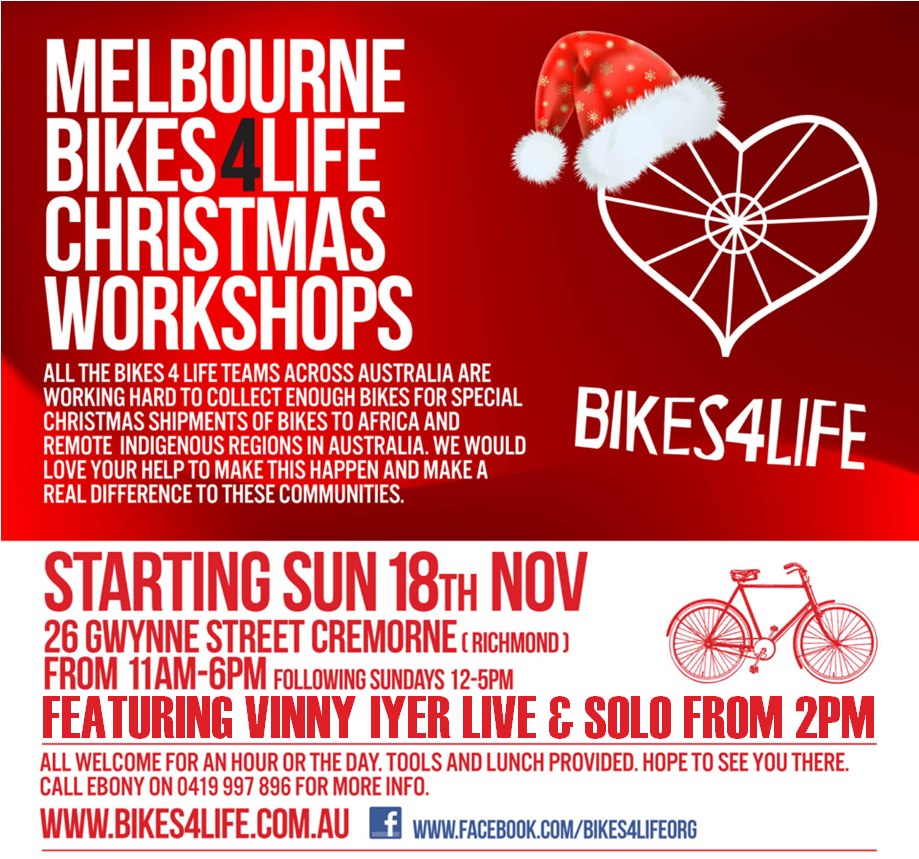
All the Bikes 4 Life teams across Australia are working hard to repair and collect enough bikes, spares and tools for a special Christmas shipment of bikes to Uganda and remote Indigenous communities in Australia.

We would love your help to make this happen and make a real difference to these communities.

BBQ and drinks provided with live acoustic performances from local artists including Zito Ballo and Vinnie Iyer!!

This event is to kick off our weekly Sunday workshops and BBQs and to help get our bikes ready for another shipment to AFRICA!


Melbourne Workshop Launch Party


Published on Oct 2, 2012 by ntvuganda http://www.ntvuganda.co.ug/

Security has remained tight at the residence of Opposition leader Dr. Kiiza Besigye as they blocked him from moving out. It is here that he rubbished police allegations that he was behind a haul of ammunition which had been seized in Kalerwe just a day before the walk to freedom demonstrations. However Police Commander Kampala metropolitan Andrew Kaweesi yesterday told NTV that he had substantive evidence that Besigye is organizing an armed rebellion to overthrow the government an issue he said police wont allow.

What’s the difference between the actions of a WARMONGER & WARLORD?

Take Uganda‘s President Yoweri Museveni & LRA (Lord’s Resistance Army) leader Joseph Kony for example… One’s totally MAD and the other’s just plain BAD… And both are BRUTAL despots and responsible for horrific crimes against humanity. (although Museveni has full impunity whereas Kony isn’t so privileged)

People would assume that the President (also known as M7) is the lesser of the two evils, but we are not so easily convinced. What are your thoughts?

So who’s worse? It’s a classic case of Mad Vs Bad…

& Please join our exciting new Facebook Group for some really interesting & controversial postings at: Mad Vs Bad

You can also join the conversation on Twitter by following @madvsbad and @atlanticstar233 – PEACE OUT, EB x

In 2009 I spent quite some time with the students and former child soldiers at Friends of Orphans Rehabilitation Centre in Pader, Northern Uganda. I was also lucky to re-unite with many of the youth when I returned to Northern Uganda earlier this year!

The short video clip below is from my first trip, and was taken on my second day at Friends of Orphans, just as I was getting to know the young women and children, who had in their recent pasts served as child soldiers in Joseph Kony‘s LRA (Lord’s Resistance Army).

The video is classic… Enjoy!

Ebony at Friends of Orphans from Ebony Butler on Vimeo.

Although my method is not a common technique used in child soldier rehabilitation and re-integration efforts (in fact I think it may have never been used anywhere in the world before this!) I do know for a fact that it works – and if not kissing, at least being friendly; funny; open and a little bit ‘Ebonesque’!

The students at FRO Uganda opened up to us immediately after the little kiss with Moses, and I do believe this helped in building the strong relationships we had with the students. Getting everyone laughing and happy was a great building block that lead to many of the former abductees, both boys and girls, wanting to become friends and engage in conversation, which then lead to them confiding in and trusting us. This also resulted in the beginning of new and long-lasting friendships, which have stood the test of time…


Yesterday Human Rights Watch (HRW) released a new 50 page report on Uganda documenting an influx of government attacks on organizations whose focus includes oil revenue transparency, land acquisition compensation, legal & governance reform, and protection of human rights.

Excerpt: ‘If your research raises a flag about people in power in this country, and how they are getting money out of this country, you are at serious risk. If you preach human rights, you are anti-development, an economic saboteur. You are not going to talk about land, oil, and good governance.’

Comment from our Child Troopers Facebook Post:

Doka Oringtho Musa: When Museveni wants to use the Army to steal elections, he does not need the Civil Society monitoring his activities.

Uphold Rights of Freedom of Expression and Association

AUGUST 21, 2012
  • © 2011 Human Rights Watch
Uganda’s government is putting serious pressure on civil society, particularly on organizations that might be seen as infringing upon the officials’ political and financial interests. Civil society should have space to conduct research and take part in policy debates without fear of government reprisals.
Maria Burnett, senior Africa researcher at Human Rights Watch

(Nairobi) – Research and advocacy organizations inUganda that deal with controversial topics are facing increasing harassment by Uganda’s government, Human Rights Watch said in a report released today. Groups have recently faced forced closure of meetings, threats, harassment, arrest, and punitive bureaucratic interference. The Ugandan government should end its hostile rhetoric and repeated obstructions of nongovernmental organizations, Human Rights Watch said.

The 50-page report, “Curtailing Criticism: Intimidation and Obstruction of Civil Society in Uganda,”documents increasing government attacks on organizations whose focus includes oil revenue transparency, land acquisition compensation, legal and governance reform, and protection of human rights, particularly the rights of lesbian, gay, bisexual, and transgender (LGBT) people. Both government ministers and district-level officials have engaged in obstruction, Human Rights Watch said.

“Uganda’s government is putting serious pressure on civil society, particularly on organizations that might be seen as infringing upon the officials’ political and financial interests,” said Maria Burnett, senior Africa researcher at Human Rights Watch. “Civil society should have space to conduct research and take part in policy debates without fear of government reprisals.”

President Yoweri Museveni, in office since 1986, is widely believed to be gearing up for yet another term. Since his re-election in 2011, political tensions have been running high and public criticism of government has escalated. To better control this environment the ruling party’s high-ranking government officials are increasingly scrutinizing nongovernmental organizations and the impact they might have on public perceptions of governance and management of public funds, Human Rights Watch found.

This report is based on research carried out by Human Rights Watch staff throughout 2011, as well as in-country research from May to July 2012, and a review of Uganda’s nongovernmental regulations and other relevant laws. Human Rights Watch interviewed 41 people, including 25 representatives of organizations working on a broad range of thematic work and from around the country, as well as donors, police, and government actors.

The operations of nongovernmental organizations in Uganda are regulated by the country’s NGO Act, which requires organizations to register with the government’s NGO Board, managed by the minister of internal affairs. Members of Uganda’s intelligence services sit on the board to monitor civil society activity. In this way, organizations are treated as possible national security threats.

The NGO Act as amended in 2006 restricts operations of nongovernmental organizations through lengthy and convoluted registration requirements and confusing procedures that groups are expected to comply with in order to receive permission to conduct research. In April 2009 eight organizations filed a challenge to the act before the Constitutional court, arguing that some provisions are inconsistent with the constitution, the International Covenant on Civil and Political Rights, and the East African Community Treaty. The case is yet to be scheduled for a hearing.

A large number – perhaps thousands – of nongovernmental organizations operate in Uganda. The government allows some groups, particularly those involved in service delivery, significant latitude. But oil transparency, land, governance, and human rights groups have had an increasingly difficult time both carrying out their work and advocating for change in public forums, Human Rights Watch found.

In 2010, the Ministry of Internal Affairs and the leadership of the nongovernmental organization sector negotiated an NGO Policy, a generally positive document that is an important step in addressing civil society concerns. But the government has not formally put the policy into operation and it holds no legal weight. Recent actions of the government’s NGO Board betray the aspirations of the policy. For example, in June 2012 the board told one organization working in governance and oil revenue transparency to desist from participating in “loose unregistered coalitions.” The NGO Policy specifically states that “clusters, networks or umbrella organizations” should be strengthened. The nongovernmental organization laws are silent on how or if coalitions must register as a legal entity.

In May 2012, the government ordered the NGO Board to carry out an investigation into the research of a group that documents unlawful land acquisitions. The board, acting outside its legal mandate, recommended that the organization should apologize for a report it issued about the subject and withdraw it, or face deregistration.

Another group working to help local communities receive fair compensation for land used in a large-scale electricity project was said to be “bordering on sabotage of government programs” by the government agency involved in the project. The government requires any organization to seek written permission from the permanent secretary of the Ministry of Energy and Mineral Development each time they seek to visit the oil region, even though no law or publicly available policy requires them to seek such permission for the visits. These policies and practices obstruct access to affected communities and inhibit research and advocacy on oil accountability and transparency.

One representative of a nongovernmental group told Human Rights Watch that, “If your research raises a flag about people in power in this country, and how they are getting money out of this country, you are at serious risk. If you preach human rights, you are anti-development, an economic saboteur. You are not going to talk about land, oil, and good governance. This is just the beginning, but the tensions have been accumulating.”

At the same time, the government’s hostility to, and harassment of, Uganda’s LGBT community and its leadership is unabated. Government officials demonizing homosexuality are targeting a vulnerable community and deliberately misinforming the public, stirring hatred, and diverting donor attention. LGBT organizations are forced to operate on the margins because criminal laws on homosexuality prevent them from legally registering with the NGO Board. In the last few months two workshops focused on advocacy for the rights of LGBT people have been forcibly shut down by police at the behest of the minister of state for ethics and integrity, though there is no basis in law for such actions. In one instance activists were temporarily detained. The minister has stated unequivocally that organizations supporting the rights of LGBT people will be deregistered.

With the public’s frustrations with the ruling party leadership since the February 2011 elections, many see the government’s relentless focus on the alleged threat of homosexuality as a facile populist strategy to gain support. The LGBT community in Uganda remains deeply vulnerable to public harassment and violence. Organizations told Human Rights Watch that they fear that the hostility toward the LGBT community will be used to slander human rights organizations and undercut their work in all areas.

“It is not illegal in Uganda to discuss homosexuality or advocate for legal reform to decriminalize homosexuality, and government officials should not behave like it is,” Burnett said. “Government officials should remember they have a duty to protect the rights of all citizens, not only citizens they agree with.”

Given the increasingly challenging operating environment, staff and representatives of nongovernmental groups expressed serious concerns about their ability to maintain their research, advocate positions on controversial issues, and protect their employees. Representatives of these groups told Human Rights Watch that they fear they will not be able to carry out their mandates due to the hostile environment, and some acknowledged that they have begun to censor their own work to maintain some level of operations.

The government of Uganda should change its approach to all nongovernmental organizations, especially those working on sensitive or controversial subjects, and improve the operating space for all civil society, Human Rights Watch said. The government should rein in hostile rhetoric, amend laws that treat nongovernmental organizations as possible threats to national security, and publicly support the essential role of civil society. In turn, Uganda’s international partners, especially those considering funding the NGO Board, should actively voice their concerns about the need to end unjustifiable interference in civil society operations.

“The government should publicly support the essential role of civil society in stimulating public debate, rather than attacking this essential element of a human rights-respecting democracy,” Burnett said. “Uganda’s international partners should actively voice their concerns regarding these threats to nongovernmental groups, particularly given the escalation in government hostility toward freedom of expression and association.”
 

‘The Beginning of the War Boys of Museveni and himself clearly indicate the life that would emerge once out of the bush.Just the this story depicts what is being seen today in Uganda and Rwanda how these people are treating the Citizens.The grew up without love but greed and self exaltation,They cherished pride bad spirit and brutality manifested in their hypocrisy to be with neighbors but their hearts were very far from what they used to say and share with friends.This is why much corruption,promotion of poverty in the country and theft of people’s and government properties are missing as nobody in the Government is moved to bother.Bad trees cannot bear good fruits.Museveni and his friends started as thieves because going into the bush was not genuine.It was DP who had the mandate of the people to go to the bush and the so called UMP lead by Museveni with hidden agenda hijacked the opportunity thus creating chaos now.Museveni came to Power as a vandalize,thief and hypocrite person who had deceived everyone as he had no morals in his life to show that he was a lead of the People. Now Ugandans have studied Museveni and come out with one conclusion that enough is enough to hell with Museveni’s Ideologies and poor governance depicted by his Rule to date.’
Comment from article below by: bishangap@gmail.com • http://bit.ly/Qnv58q
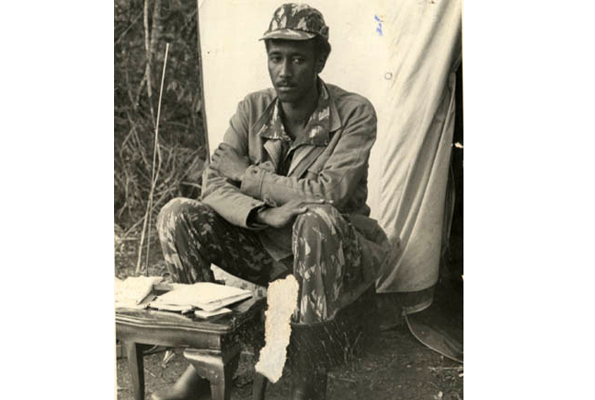
Salim Saleh during the guerilla war. He at one point shot himself in the leg during a drunken spur and was later charged with attempting to kill a Member of the High Command. COURTESY PHOTO
Posted  Saturday, August 11  2012 (NATIONAL MONITOR UGANDA – http://www.monitor.co.ug)

IN SUMMARY

John Kazoora fled from Makerere University before graduation and joined the NRA rebellion in Luweero. In the third part of our serialisation of extracts from his memoirs, he reveals his encounters with Paul Kagame, Saleh’s shooting from the hip, and the toll of war on Museveni.

Title: Betrayed by my leader
Author: John B. Kazoora
Available: Monday, Aug. 13

Kampala.

We were ordered to sit down, and in came a towering man exuding a lot of poise and confidence. He asked us to introduce ourselves; our reasons for wanting to join the struggle and about the journey to the bush. We later learnt that he was the most feared Commander Matayo Kyaligonza (Now Major General). He said he was disappointed with “intellectuals” because one intellectual called Kwizera who had also left Makerere University had harassed a girl in the village. In his mind he lumped us together with Kwizera. I was surprised by the generalising.

[Later] Paul Kagame the intelligence officer (Now President of Rwanda) called us and took away our identity cards. When we asked him why, he said “why do you need identity cards? Don’t bring your intellectualism here”, and that was the last we saw of them. We immediately started military training.

After three weeks of training in Kitebere at about 7:30p.m. I heard people whispering that Mzee (Chairman High Command (CHC)) Yoweri Museveni had come to our camp. The following morning he summoned our group of Biraaro, Karegyesa, Gariyo, Bwirizayo and I. He was seated with Sam Magara and Elly Tumwine. He asked us to introduce ourselves and to tell him where we originated from.

A few weeks later the CHC sent for our group again. We went and found him seated with Sam Magara and Frank Guma. After fidgeting and saluting him, he asked us to reintroduce ourselves again and wanted to know what we had read at university. All of us had read Political Science except Kenneth Gariyo who had studied Accounting. He then asked us who had taught us Political Science and we told him Mahmood Mamdani. He burst out laughing and said “how can Mamdani of all people teach you? What did he teach you anyway?”

He told Magara to punish us “Shughulikia haawa” “Take care of them” he said. Magara then called CHC’s escorts Arthur Kasasira, Musumbiji, Mugabi (not Hannington) and Dampa and ordered them to punish us. They removed our shirts and gave us ngwara (suddenly tilting you off from the ground), rolled us in mud and stinging shrubs (engyenyi), smeared us with ash and water and we were finally told to keep guard in the coldness the whole night. Throughout this ordeal CHC was laughing his head off. He seemed to find it hilarious. This was certainly part of initiation to remove the so-called intellectualism and face reality especially obeying orders. They later let us off.

(more…)

a70667's avatara70667

The news that Gen. Museveni plucked 740 million dollars from state coffers (UShs 1.7 trillion) to buy 6 Russian Sukhoi Su-30MKK fighter jets, at a time when food prices are running amok, has already riled the Ugandan populace. It’s equivalent to a UPDF soldier’s boot into the gut of the typical Ugandan, in whose wildest dreams, flying in a jet liner remains just that: an elusive dream.

So alarming was it at first that many Uganda missed the smelly rat in the deal. But anyway, every Ugandan, by rule-of-thumb, knows that corruption is pervasive is most government deals. So I trust they would have eventually smelt and seen the rat after recovering from the anger and hunger. Yes hunger! To keep perspective on the involved finances, I’m not gonna go into the question of if we need these jets: in summary we don’t! Gaddafi will probably tell you the same 🙂

So…

View original post 234 more words

Hillary Clinton in Uganda… And why would she smile so lovingly at a brutal dictator who soon, like Kagame, will be exposed?
Forget Kony, the man you want is staring at you in the face! Kony will stop when Museveni is made accountable for his crimes also. Just my opinion…


‘Clinton is expected to highlight US programmes on development, education and HIV/AIDS — long the backbone of US engagement with Africa — as well as US economic interest in a continent whose rich resources and enviable growth rates have drawn rival suitors, including China and India.’


http://tvnz.co.nz/world-news/security-in-focus-clinton-heads-africa-4999102


Related articles:

I was recently in Northern Uganda (Odek) where I spent some time with the victims of Nodding Disease, and their parents / guardians or only surviving family members. It was a period, and experience in my life I will always hold close to my heart, and could never forget. The faces of these children still haunt me to this day. I hope through my work with children around the world sick or not, that I have been able to make them smile, cheer them up, make them giggle and laugh through their suffering… But this was a different story altogether. The suffering, the pain, the anguish and isolation of these poor, sick and neglected people, is a sad story that has its roots buried far beyond the first outbreak of Nodding Disease.

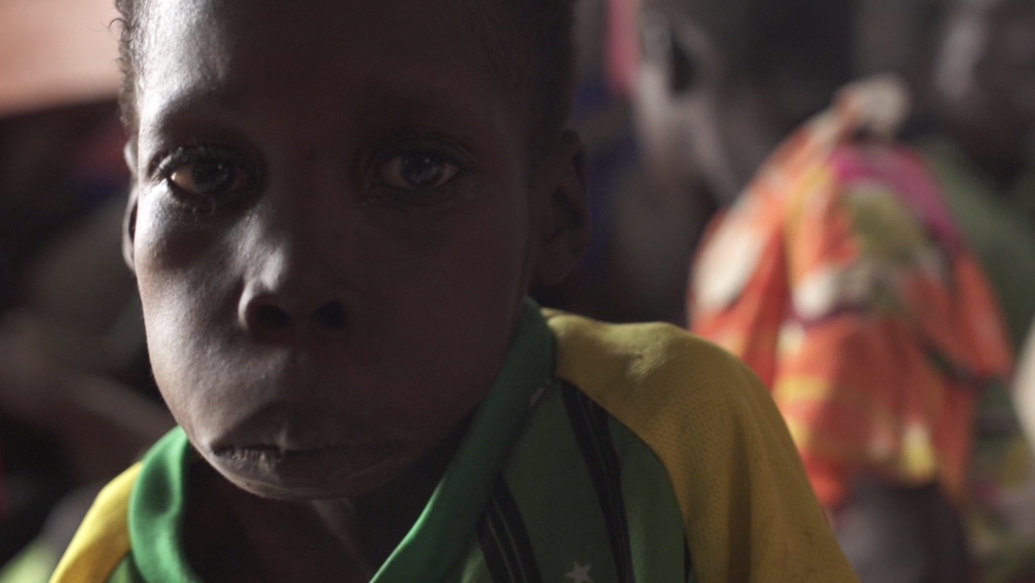
This young boy has been severely disfigured by Nodding Disease. He is 12 years old yet looks about 6, he cannot speak and he is the last surviving son in his family. 4 died of Nodding Disease and one was abducted by the LRA and has never returned. His father does not know if he is dead or alive. April, 2012 www.atlanticstarproductions.com

The sad truth is that the government of Uganda does not really care about the poor young Acholi children in the North who are suffering, then dying of this shocking Nodding disease. When I was in Uganda a couple of months ago, there was so much local media showing President Museveni out in health clinics and setting up facilities for nodding disease victims and so forth. That was while I was in the same country. Actually! During my time in Northern Uganda; the President just flew in for many media opportunities. Speaking about these issues, I would say I have spent more time in Northern Uganda than the President himself. I would have spent more time on Acholi soil, speaking Acholi (a little, but a little more than President Museveni), working with them; learning; sharing; caring; teaching; drinking; eating; laughing; living; crying with them… and establishing life-long friends with them! Oh, my heart goes out to my dear Acholi friends from the North!

So all this news about the children being looked after and in hospital is a total lie. Because I have witnessed firsthand the suffering and the devastation of these young and older families who have children with the disease, I spent time with them, I listened to their stories and I saw with my own eyes what was going on. It is a total travesty by the Government of Uganda. There may be some health clinics set up for a few certain children, but in Odek, Josph Kony’s hometown, situated between Gulu and Pader (closer to Pader), hashundreds and hundreds of children with Nodding Disease, WITHOUT ANY AID AT ALL.

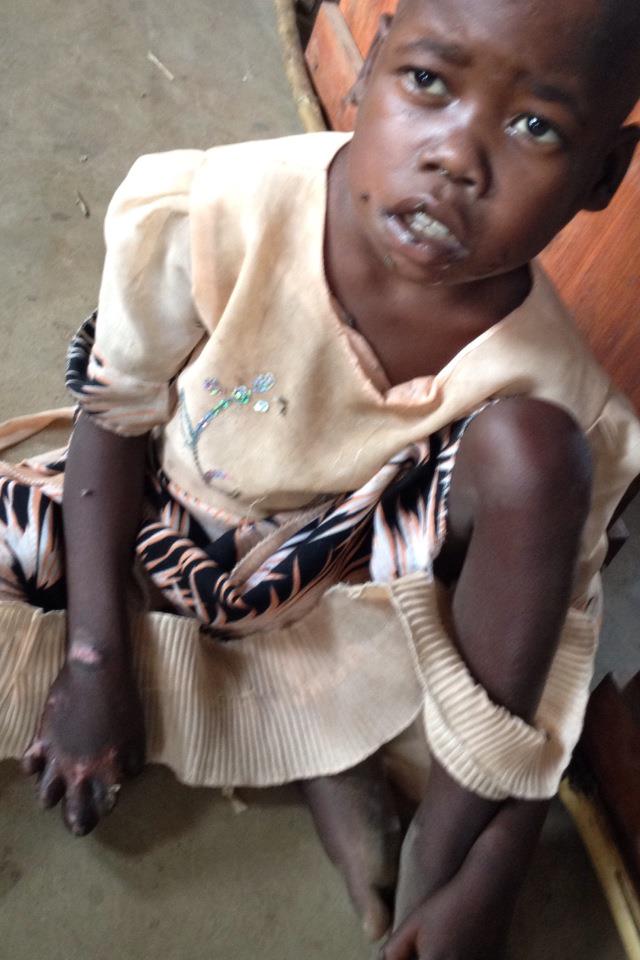
A young nodding disease victim in Odek northern Uganda who has ran into fire 8 times and had her fingers burnt & cut off, without treatment! Please explain Mr. President? April 2012

There have been a lot of funds that were supposed to be allocated to Nodding Disease, but they didn’t make it, if some did, it would surely be under 10% of what was allocated. I did not witness one clinic for the disease in all of Uganda, (Northern Uganda) yet I witnessed, on what was the most horrific and heartbreaking period of my 2 month trip there, so many young girls and boys, either tied to trees by their parent (usually only one guardian exists) to prevent them from hurting themselves as Nodding Disease victims often lose control of their behaviour and run towards fire and water, resulting in devastating and too often deadly consequences. I also interviewed the guardians, parents or remaining relatives of the young Nodding Disease victims.

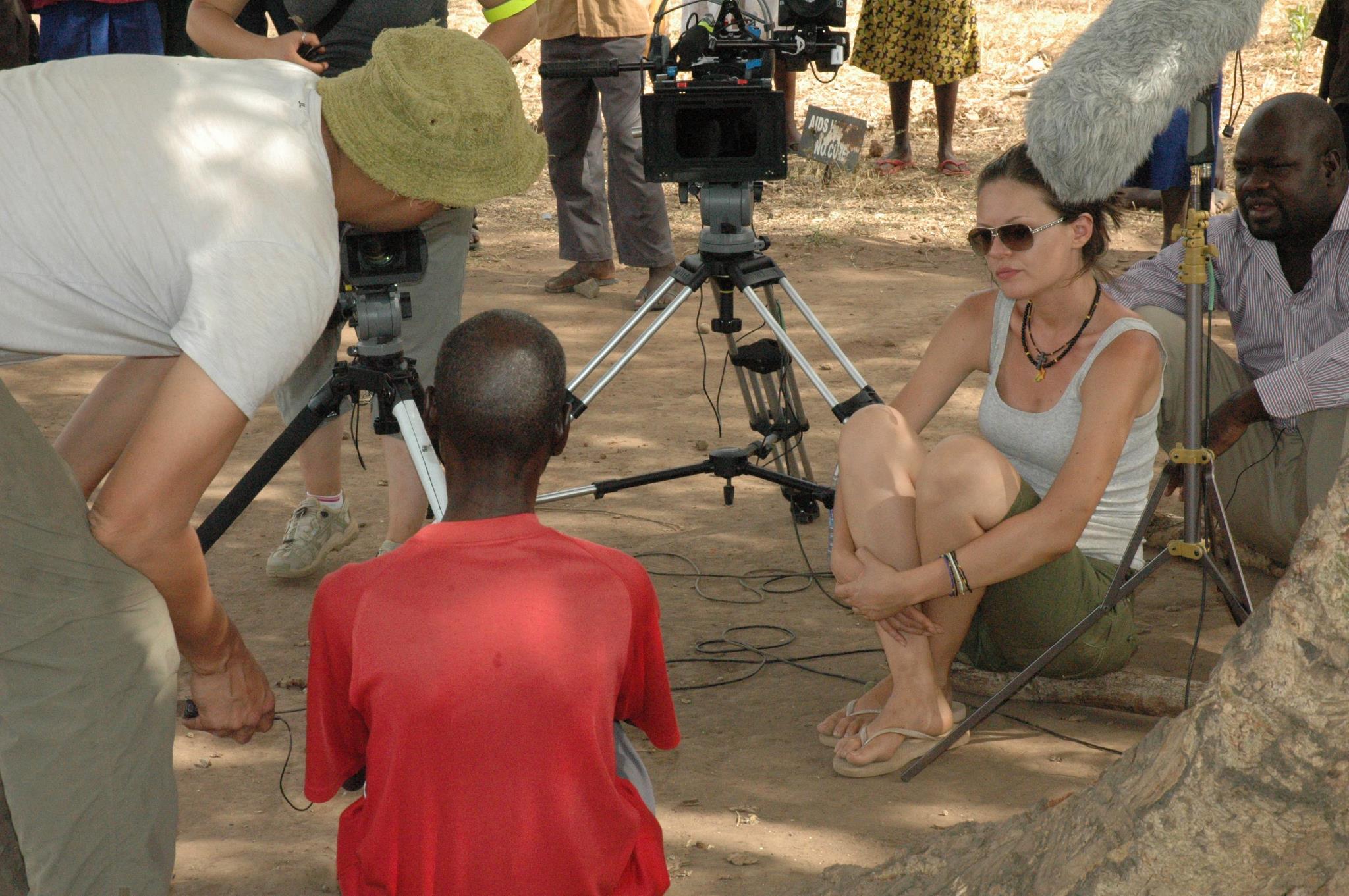
Interviewing the parent of a young Nodding Disease victim in North Uganda, April 2012

The interviews offered interesting perspectives not so often discussed or dissected in corporate or commercial media. Insights given often pointed to the World Food Programme‘s (WFP) food and the possibility that it was contaminated, either by accident or as some would argue, was a deliberate move by the Ugandan Government. It seems almost clear that the children who are affected by Nodding Disease, who are generally between the ages of 6 and 15 years, were infected during the time of the massive forced encampment of the Acholi into overcrowded, unprotected, disease ridden and violence prone Internally Displacement Camps (IDP camps), a.k.a ‘death camps’ or ‘modern day concentration camps’. It was around this period when all food was supplied to the encamped Acholi by the World Food Programme, and the disease started to become apparent. (2003 I believe).

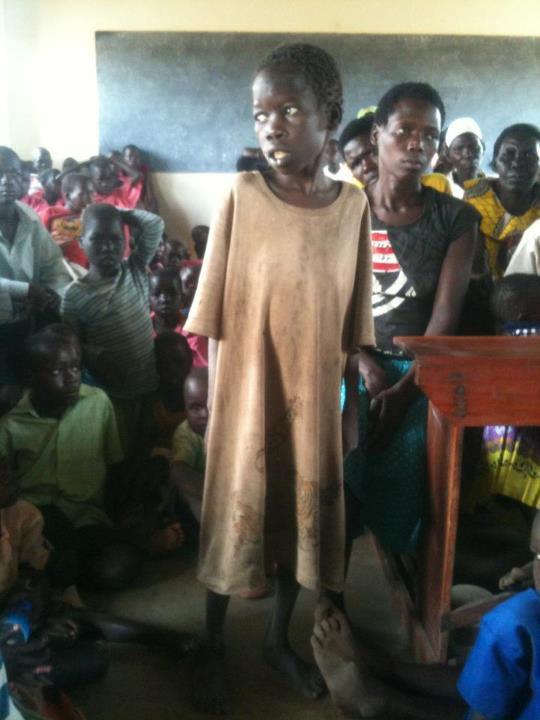
I will post a few more images here of other children I met with Nodding Disease, that were not treated at all, despite the severity of their conditions. Many have since died but these figures are not shown in official statistics, in fact, Odek was rarely mentioned in the media as an area that had suffered greatly from it. It’s a very sad story and one that demands greater attention from Uganda, and also, the rest of the world.

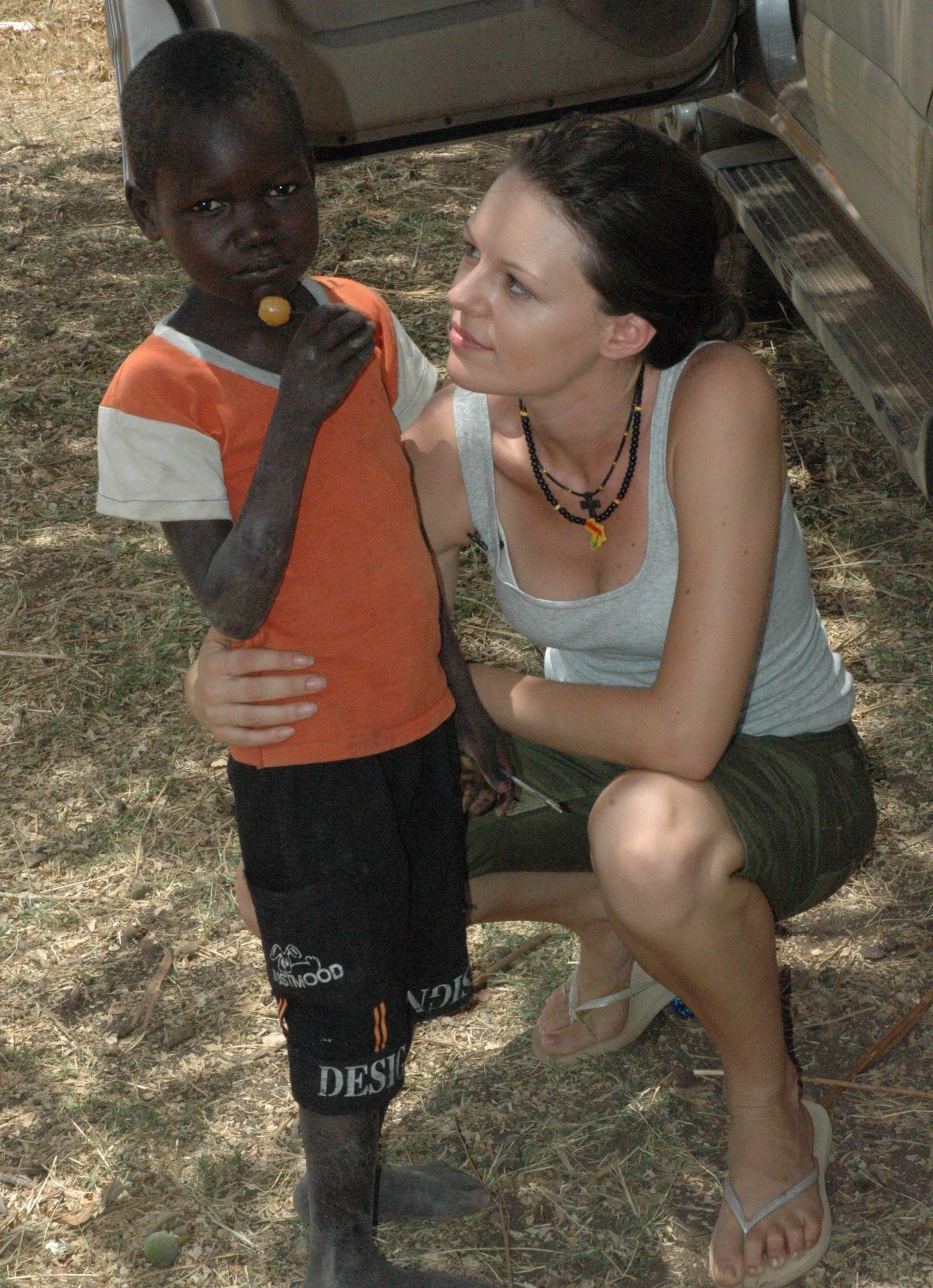
The boy I am pictured with below had the early symptoms of the mysterious & often fatal Nodding Disease.Let’s pray that his situation has not worsened and that he is receiving at least some medical care.

A young boy in Northern Uganda with early signs of Nodding Disease, April 2012

*If you haven’t yet heard of ‘Nodding Disease’, that means it needs serious attention from the international community, so scream and shout, tell people, and do your bit! Help spread the message that Nodding Disease victims (who are all children) need our help, now!

Another young victim of the horrific, and largely unknown disease… April 2012

Please follow me on twitter at the following profiles: @madvsbad @atlanticstar233 @ebony_atlanta and @bikes4lifeorg